
The latest round of negotiations for a global plastics treaty ended in Geneva in August 2025 without a clear breakthrough, dealing another blow to hopes for a binding international agreement to curb plastic pollution. Despite nearly three years of global discussions, the world remains stuck in disagreement over how to tackle the plastics crisis—especially when it comes to limiting production.
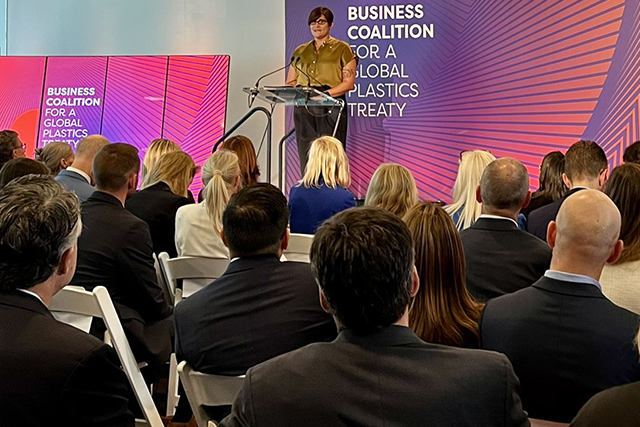
Erin Simon, Vice President and Head of Plastic Waste & Business at WWF, expressed deep concern over the lack of progress. She called the outcome “disappointing,” emphasizing that the longer countries delay firm commitments, the worse the environmental and human costs will be.
“There are no more excuses,” Simon said, urging governments to act with urgency. “We must stop treating the health of people and the planet as negotiable.”
Delegates from over 180 nations gathered for the resumed fifth session of the UN’s Intergovernmental Negotiating Committee (INC‑5.2), but divisions remained stark. A major fault line continues to be whether the treaty should include limits on how much plastic can be produced globally. Countries like Saudi Arabia, the U.S., China, and Russia have pushed back on production caps, instead supporting a treaty focused mainly on improving recycling and waste management.
Meanwhile, a coalition of more than 90 countries—supported by environmental groups, scientists, and businesses—are calling for a more comprehensive treaty that addresses the full life cycle of plastics, from production and design to disposal and chemical safety.
Simon has been a strong advocate for that broader vision. She and WWF have consistently called for binding rules that phase out harmful plastics, set global standards for product design, and provide funding to help developing countries implement these changes fairly.
“There is no credible solution to plastic pollution that doesn’t include reducing how much plastic we produce,” Simon has said in previous statements.
The Geneva talks were widely seen as a critical moment, with many hoping the session would lead to a draft treaty text. Instead, negotiators agreed only to keep talking, with no clear date set for the next meeting.
Despite the setback, Simon and others remain hopeful—but insistent that real leadership is now needed. “People want a deal,” she noted, echoing public demand for action. “It’s time for the countries pushing for ambition to step up and break the deadlock.”
The road to a global plastics treaty is far from over, but according to Simon, the world can’t afford to walk it slowly.